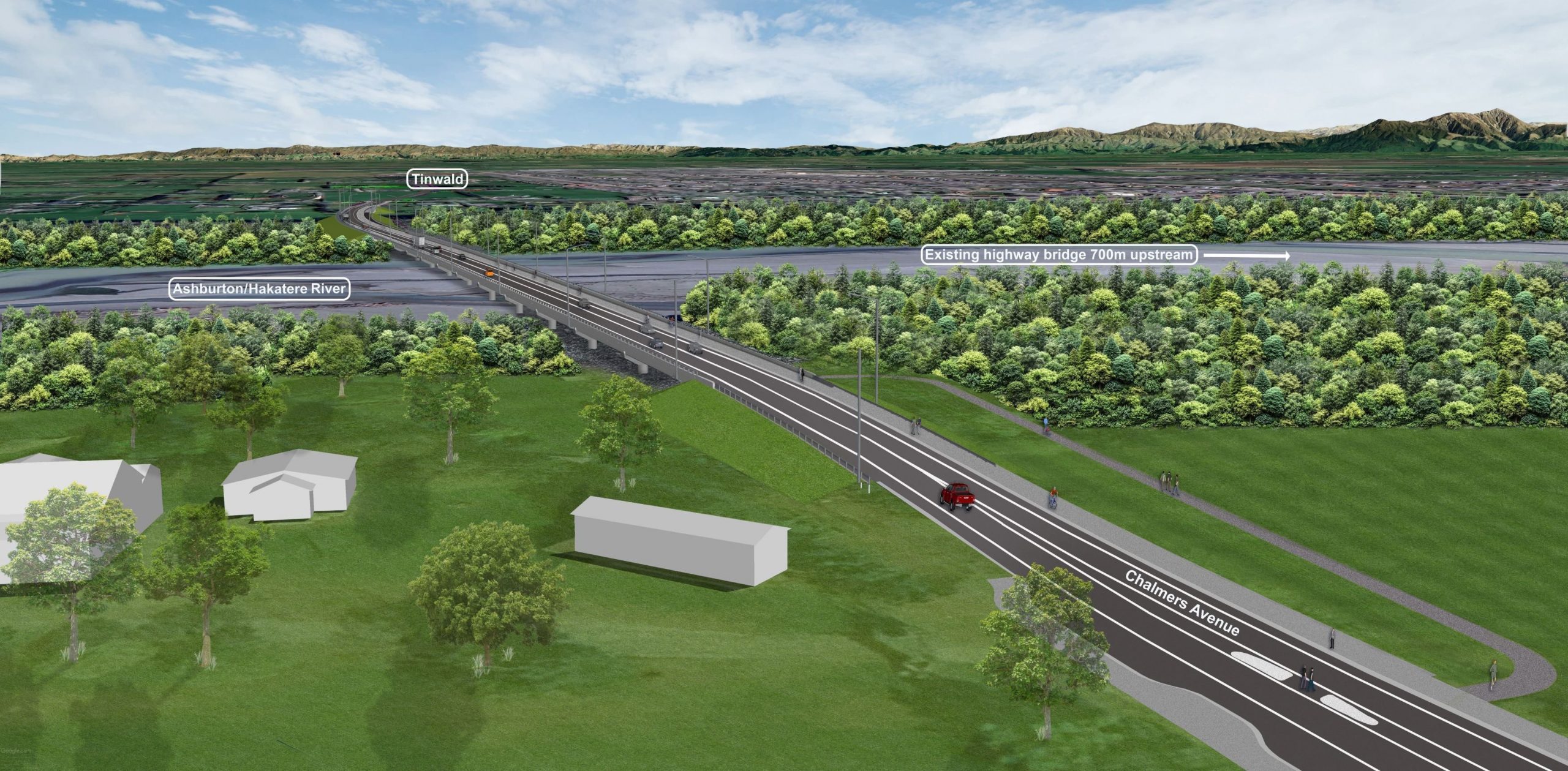
It is expected to cost $20 million for under 2km of new road to connect to Ashburton’s long-awaited second bridge.
That’s the figure NZ Transport Agency Waka Kotahi has advised the district council to use in its 2026/2027 budgeting, district council chief executive Hamish Riach says.
The district council had previously budgeted $7.5m to contribute towards the second bridge project, but will now budget at least $25m.
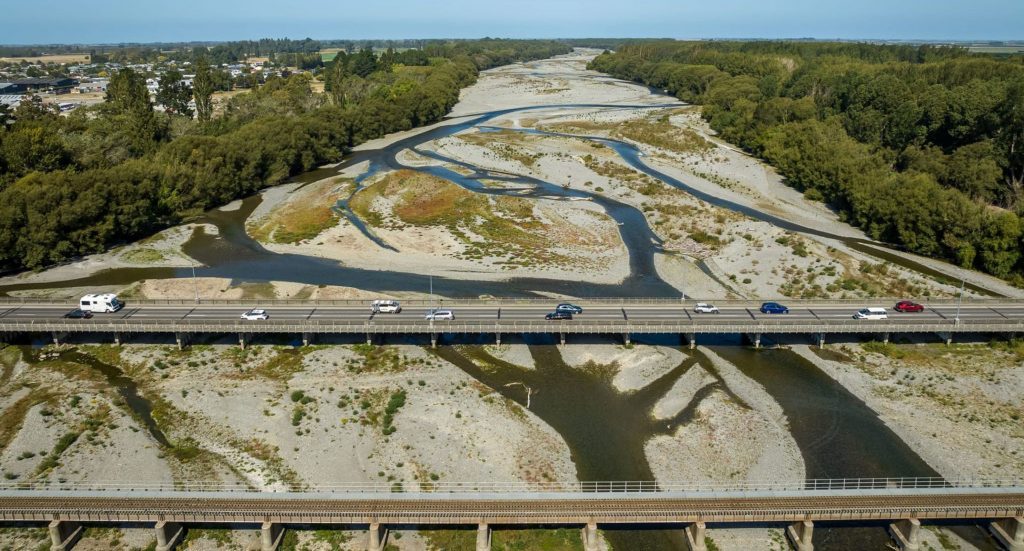
NZTA is funding the new bridge, which connects Tinwald to Ashburton and aims to relieve congestion on State Highway 1 and improve the network resilience.
The district council will pick up the tab for the road to connect the bridge to a new roundabout at Grahams Rd.
NZTA has agreed to manage the tender process for the full work package.
At a budget workshop last week, Riach said NZTA had advised $20m “is a sensible provision for this budget year” for the road connection.
“We have to do that by debt.”
He said the full design and cost of the project is yet to be revealed, but he expected it by mid-March.
“We still know from their advice that, in that year, we will need to provide $20m but the final number has not been confirmed,’’ Riach said.
“For the purposes of this budget, I think it’s sensible to take the number they have suggested to us.”
The draft annual plan workshop last week revealed the loan-funded project will cost ratepayers around $572,000 in debt servicing in 2026/2027 and increase in subsequent years.
That figure also factors in the $4.9m loan the district council has budgeted to spend on the project in the 2025/2026 annual year.
It equates to just over 1 per cent of the draft 10.2 per cent rate increase figure, slightly lower than the long-term plan forecast of 11 per cent.
The draft budgets show the district council’s debt starting at $149.1m and increasing to $177.9m by the end of the 2026/27 year, mainly down to the $20m for the bridge.
Deputy Mayor Richard Wilson said it was “a big lump of debt we are going to take on”.
Councillor Carolyn Cameron said the district council need to “revalidate the costings” provided by NZTA.
“We don’t want another Transmission Gully.”
The Transmission Gully motorway north of Wellington had a delayed finish and faced cost overruns.
Riach said NZTA had been contracted to manage the design and tender process that will determine the cost, but the district council will “reserve the right for the final approval of the design of the road”.
Councillors have some of the progress design work to “know what the road is going to look like”, they just haven’t seen the final design and cost he said.
The bridge is the biggest project on the district council’s books, but the biggest impact on the draft 10.2 per cent rate increase is the introducing of the food and organic waste kerbside collection.
The roll out of the new green waste bins ($1.6m) is proposed to impact the solid waste budget, which will increase by $2.46m – 4.5 per cent of the rates.
The three waters services, which will go under the control of the standalone business unit on July 1 2027, will cost $2.22m (3.9 per cent).
Wilson made note of the fact that those major drivers of the overall rates increase were for targeted rate services.
He wanted a review of the green bin roll out budgets and also wanted more details around the parks and open spaces budget, suggesting it’s $6.751m budget is “a colossal amount of money”.
What if the rates cap was in effect?
Under the government’s proposed rates cap policy, the district council would have to maintain a rates rise of between 2-4 per cent, excluding water charges.
Councils can also seek exceptions for major infrastructure projects.
Based on those guidelines the district council rate rise would be about 5.2 per cent.