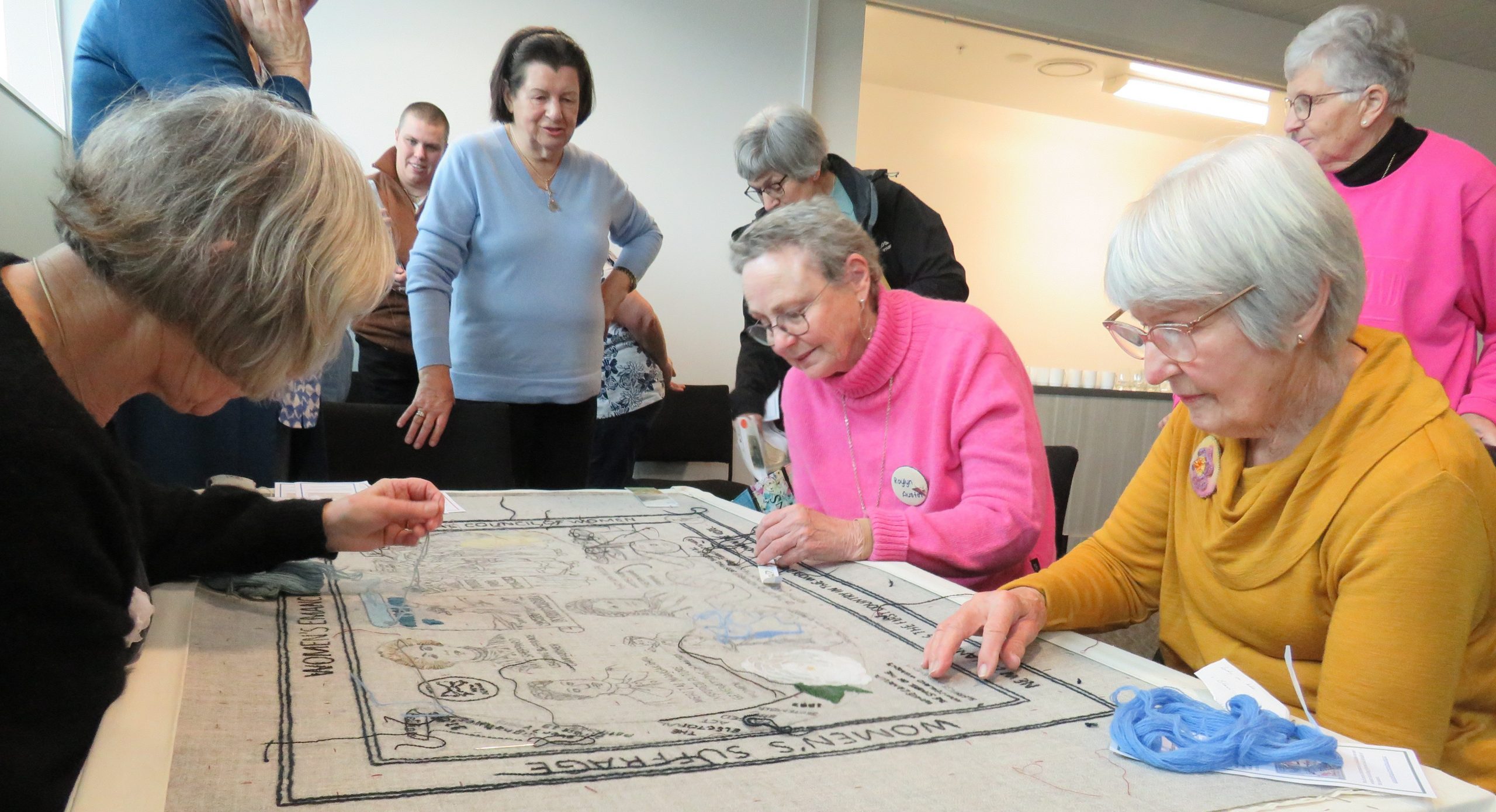
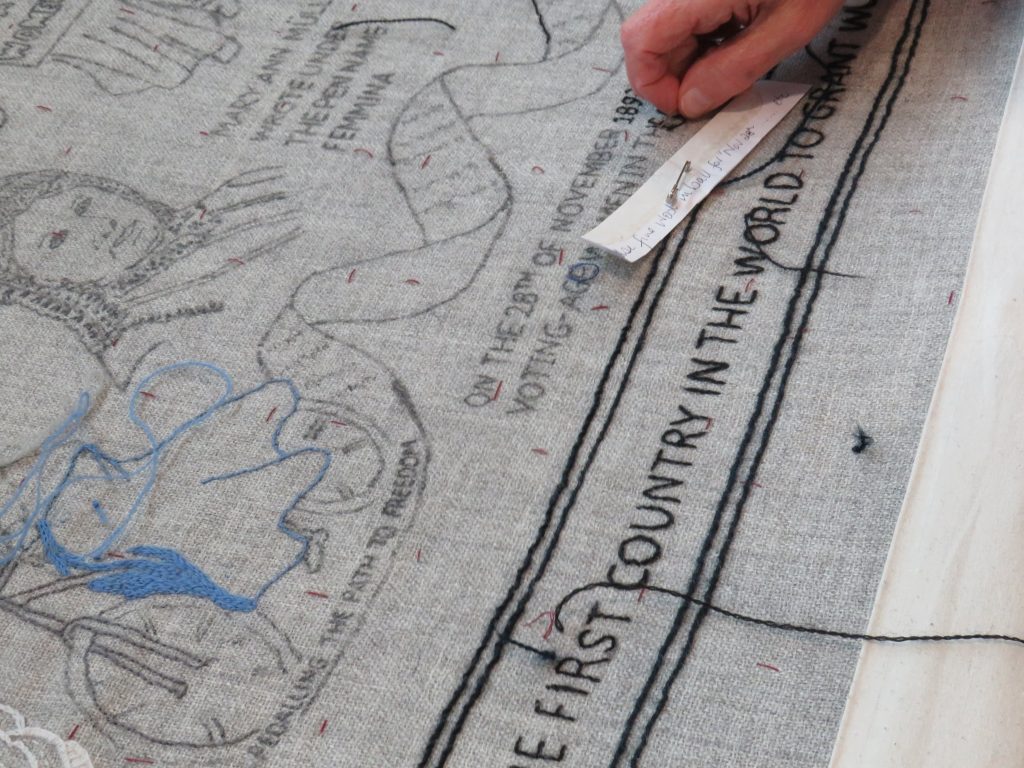
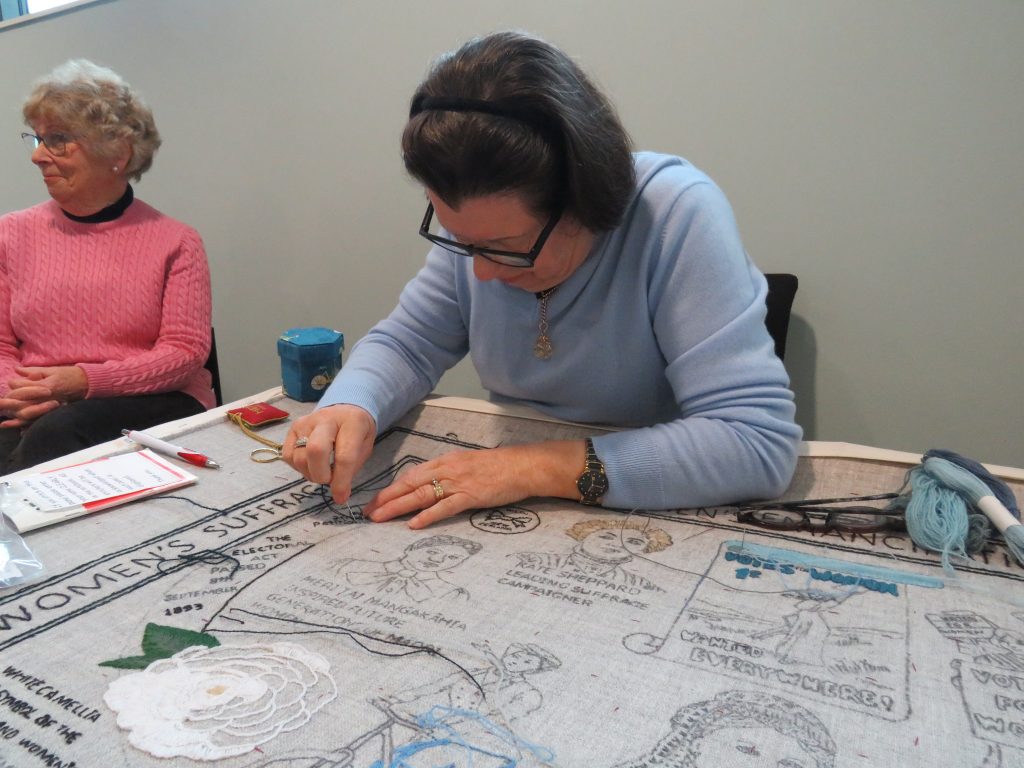
Twenty two women added a stitch to the New Zealand Tapestry Trust Suffragette panel on Saturday at the Ashburton Art Gallery and Museum.
Ashburton Embroidery Guild, the Ashburton Art Gallery and Museum and Ashburton Family History hosted the stitching session along with a talk on a few of the Mid Canterbury women who signed the suffrage petition.
The tapestry is one of 130 panels recording the history of New Zealand.
Ashburton Guild member Heather Ralston said it was special adding one’s own name to history.
‘‘It was such a privilege for all of the 22 ladies who added their stitches to the panel,” Ralston said.
As well as the opportunity to add a stitch or two to the panel two members of the history group talked about their ongoing research of the women who signed the petition from Ashburton.
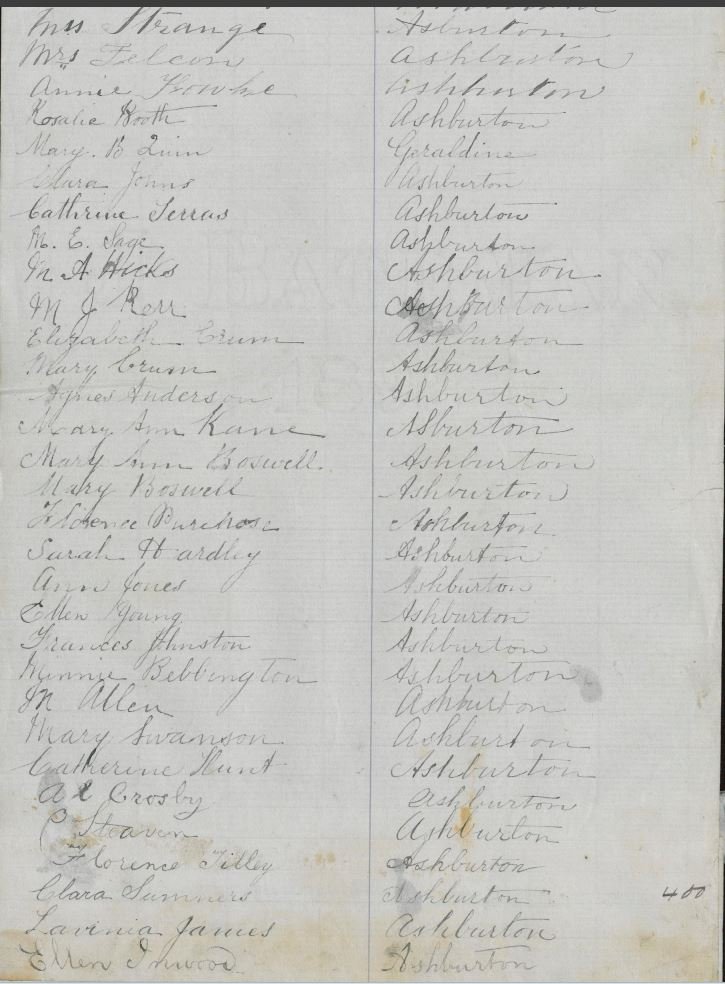
Researcher Lynne Armstrong told the more than 50 attendees at the talk that it was believed 569 women had signed the petition but their research has confirmed there were 631.
Some women signed the petition twice like Catherine Hunt /Catherine Buck who signed under her birth name and her married name.
The Women’s Christian Temperance Union, led by president Kate Sheppard, was the driving force behind the petition.
On June 15, 1893 a meeting of the Women’s Franchise League in Ashburton was held for women who weren’t part of the temperance union but supported the petition. Sheppard was guest speaker.
A committee of 27 members were formed and the two organisations worked together on getting women in the vote.
The president was 25-yearold Ellen Dodds, the wife of Ashburton dental surgeon.
She also signed twice.
There was a diversity among the occupations of the husbands of those women including ministers in the Baptist, Presbyterian, Methodist, and Primitive Methodist churches, and wives of a bailiff, police constable, confectioner, shop keeper and Master of the Old Man’s home.
Once women were granted the vote there was flurry of activity to get women to enrol including a set up in a local store to help women to enrol.
Researchers have spent countless hours verifying information.
Rothery Reesby said it had involved looking at husbands, children, parents and even signatures on marriage licenses to ensure the correct information.
‘‘We’ve become like detectives and we look to crosscheck the information as we look for the lost ones,” she said.
The research is uncovering stories of women who were younger than 21, the age for signing the petition, along with stories of husbands being taken to court for maintenance, others being bankrupt or dying by suicide and one women from Greenstreet who had 23 children who all lived into their old age.
In their research they have found interesting newspaper articles on families, including who gave what gift at a wedding.
The drinking habits of male family members often spurred women into signing the petition.
About six of the local women who signed did so with a simple cross.