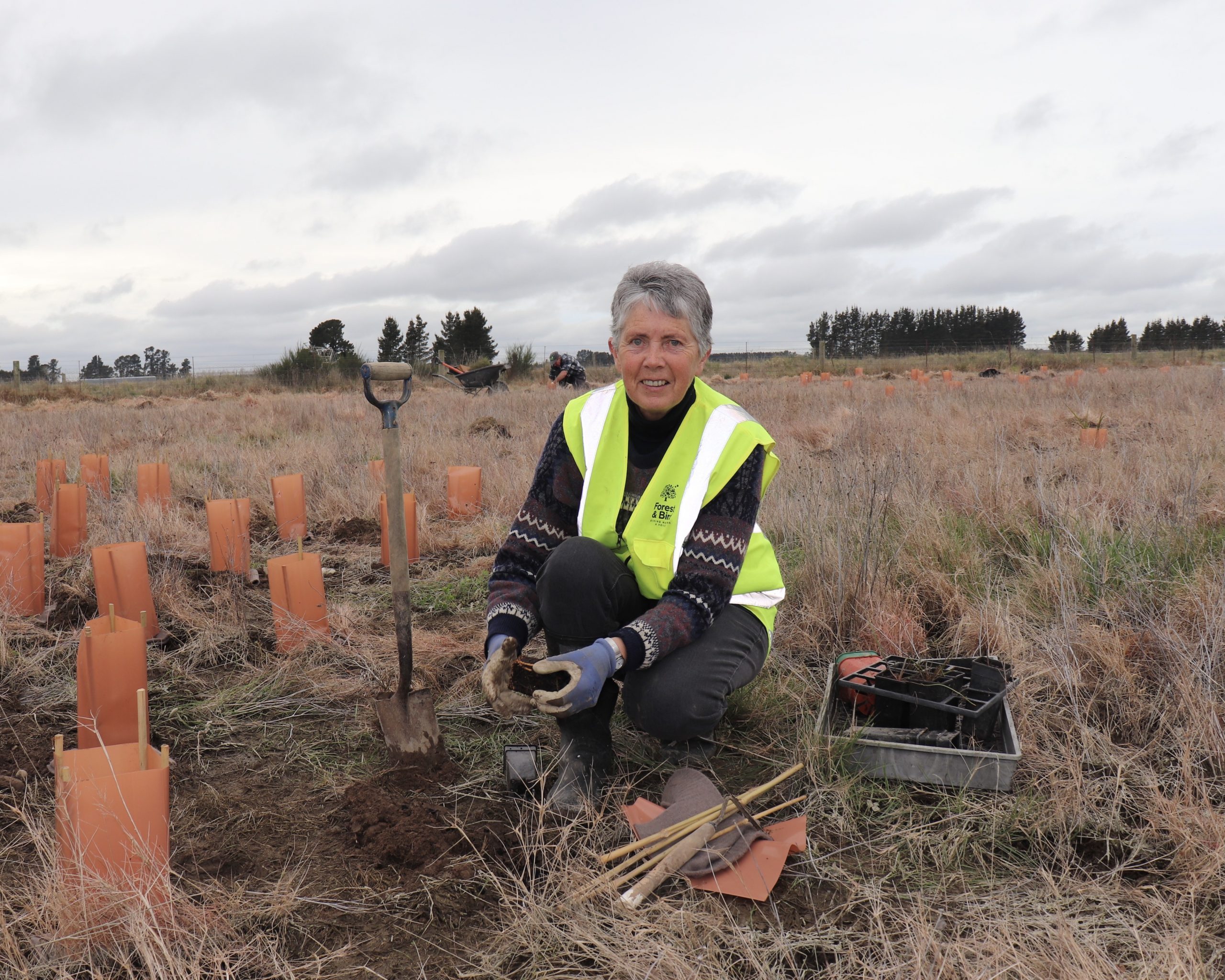
Val Clemens, who played a pivotal role in saving a critically endangered Canterbury daisy and establishing the Harris Scientific Reserve in Tinwald, has been awarded an Old Blue.
It is one of Forest & Bird’s highest honours.
It recognises Val’s many contributions to nature protection in the Ashburton District, from hands-on plant conservation and bird counts to advocacy and environmental education for children.
‘‘I’m feeling very humble and honoured by the award, especially since I have always loved the story of Don Merton and Old Blue,’’ she said, in a statement.
The Old Blue award was named for the Chatham Island black robin who saved her species.
Ashburton Branch committee member Mary Ralston said since joining the branch in 2004, Val had worked tirelessly to further the aims of the branch and of Forest & Bird, through her initiative, conservation expertise, excellent communication skills, and sheer determination.
Val seeded the idea for the branch’s major achievement – getting the the Harris Scientific Reserve on the outskirts of Ashburton established, on land once destined for a rubbish dump.
She saw its potential as a scientific reserve and galvanised the branch to persuade the council to set aside 11ha, including an area of original ka ¯nuka protected by a QEII covenant, Mary said.
Since then, Val and branch chair Edith Smith had committed themselves to replanting much of the area with ka ¯nuka and other ecosourced plants and it’s now a flourishing habitat.
Val propagated many of the native plants used in the reserve at a nursery she established at her home.
The rosette-forming perennial daisy Craspedia diversicolor, also known as puatea or Wakanui woollyhead, is a remnant of native biodiversity on the Canterbury Plains.
Once widespread, the population had dwindled to two wild plants at one site at Wakanui Beach.
Over several years, Ashburton Branch volunteers worked with botanists from Manaaki Whenua Landcare Research to boost the population through manual cross-pollination of captive and wild specimens.
‘‘Val played a significant role in the small endemic plant’s propagation and continued existence,’’ Mary said.
‘‘The species is now reasonably secure, and a population has been established at the Harris Scientific Reserve.’’
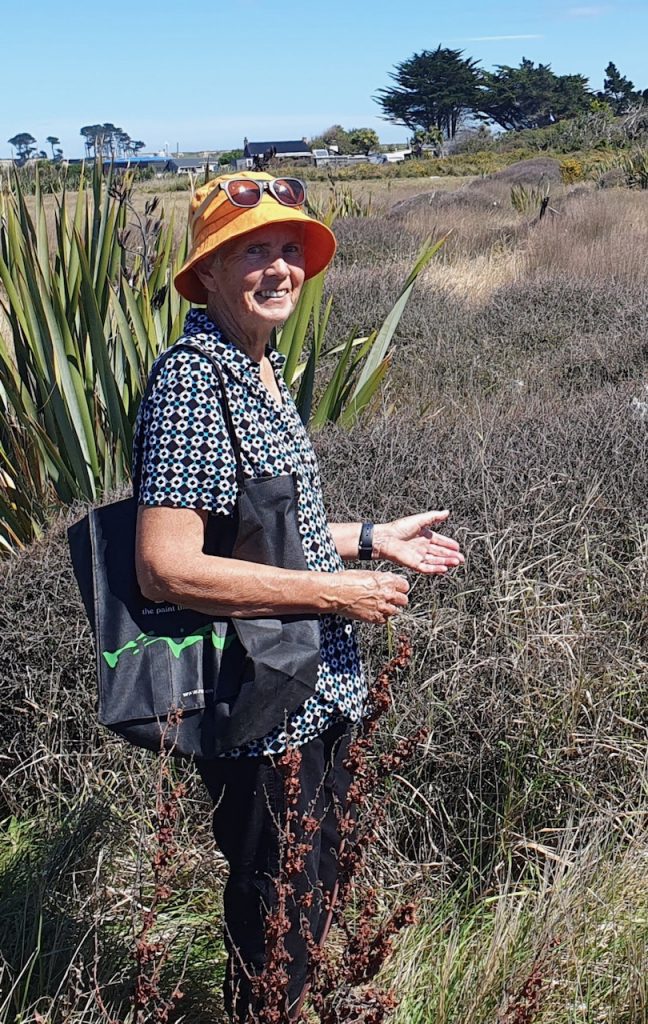
Val also campaigned for District Council to better care for the Wakanui Beach reserve, on the coast near Ashburton.
She showed local school children how to collect seeds of harakeke, oioi, shore ribbonwood, pohuehue, and coastal teasel sedge, then helped propagate and plant them in areas cleared of gorse and weeds.
Her advocacy skills were also evident in her submissions to the district council’s annual plan.
‘‘On behalf of the branch she argued for a biodiversity officer to be appointed to the council staff to provide in-house expertise in a district that faced unrelenting loss of biodiversity as the dairy industry boomed,’’ Mary said.
The council formed a Biodiversity Advisory Group in 2012, inviting Val to be a founding member, and a biodiversity officer was appointed in 2022.
‘‘The conservation work our small branch has achieved is considerable and has only been possible with Val’s consistent and invaluable input,” Mary said.