
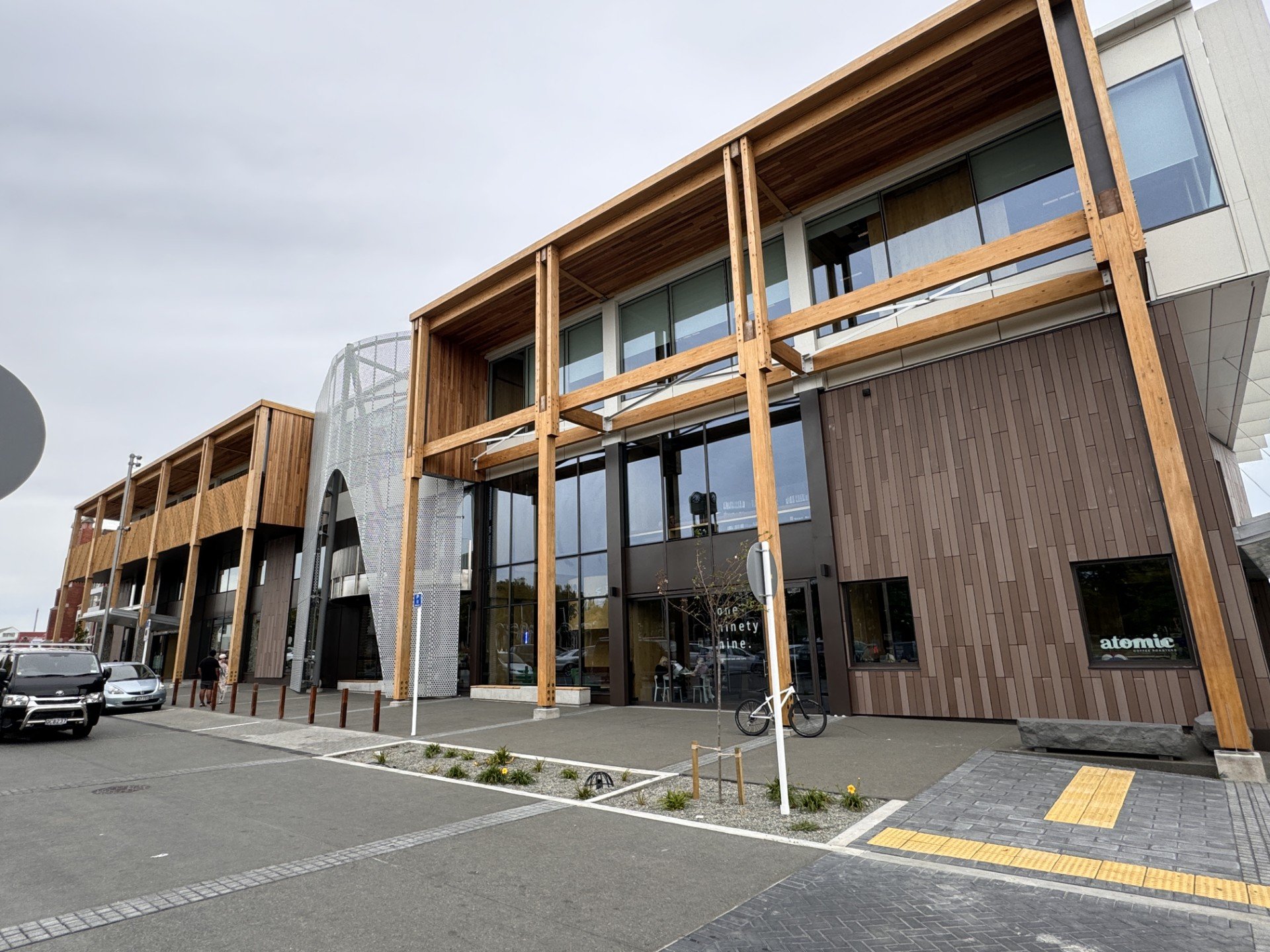
Ashburton’s $62 million library and civic centre is proving three times more expensive to run than the two buildings it replaced.
Te Whare Whakatere opened in January 2024 with the expectation that the bigger, modern building would cost more to operate than the separate old library and council building.
Its first full financial year of operation, 2024/25, cost $848,589 to run the facility – excluding depreciation, overheads, and library activity costs.
Council chief executive Hamish Riach said the three largest contributors to that total were insurance ($329,123), electricity ($166,711), and cleaning contracts ($138,080) – equating to $633,914 or 75 per cent of the total cost.
“The budget was prepared on the assumptions available at the time, however, the increases we’ve seen for items such as insurance have been higher than anticipated.”
The building opened in January 2024 and in its first six months to the end of the 2023/24 financial year, it cost $381,247 to run the building he said.
Those six months were more than it cost to run the two previous buildings combined across their final full year of operation.

In 2022/23, the two old buildings had a combined total of $292,931 – the library being $87,742 and the council administration building $205,189.
“It’s worth noting that once construction of the new facility was confirmed, we sought to minimise expenditure on maintenance and repairs in the old buildings.
“To the point that we had buckets for catching drips and carpets taped together instead of being replaced.”
The footprint of Te Whare Whakatere is around twice as large as the former buildings and has higher ceilings, Riach said.
“This increases the volume of air we need to heat and cool.
“It also has longer operating hours, around 4.5 additional per week, compared with the old facilities.
“Te Whare Whakatere welcomes almost twice as many visitors as the old library, and includes popular facilities such as the event space, makerspace, sound studio, and a range of community meeting rooms that weren’t available in the old building.”
The cost increase was not due to staff increases, he said.
“Apart from the addition of a sound studio specialist, the library team is the same size.
“Maintenance has been undertaken where needed and claims made under warranty where possible under the contract.
“As many other businesses and households will have experienced, costs such as insurance and electricity have risen significantly over the last couple of years.
The total electricity bill for 2024/25 was $166,711, around $3200 a week, which includes library activity contribution of $50,000 he said.
“We’re expecting a 20-25% increase in 2025/26 and have budgeted enough to cover this.”
Security costs have also increased due to the size of the building and the number of visitors coming through the doors, he said.
Over 180,000 people visited the facility in 2024/25.
Other costs of the building are planned in 2026 including an estimated $70,000 to repaint the timber on the building’s façade.
“Timber needs to be coated to form a layer to protect the timber and prevent cracking, discolouration and wear,” Riach said.
“Colour fade and loss of ability to ‘bead’ water are good indicators on when this needs to be done.
“Coating deterioration is likely to vary as some are more or less exposed to weathering and deterioration.
“This work is expected to proceed in early 2026.’
The building also inherited the pigeon problem that has plagued other buildings in the town centre.
The council plans a $20,000 trial of the flock-off bird deterrent system.
Riach has previously stated the cost of the technology will be offset by a reduction in cleaning costs, estimating it costs around $15,000 a year to clean up after pigeons.
The “discreet looking solution” generates a series of electromagnetic pulses that birds perceive as an area to avoid, he said.
The signal creates an invisible barrier which deters birds without harming them.
“It operates at a voltage like household appliances and poses no danger to the public, pets, and the birds themselves.”
If it proves successful, the council will consider installing it at Rokowhiria, Ashburton Art Gallery and Museum as well.