Tarapuka/black-billed gulls have so far had a successful breeding season in Mid Canterbury, helped along at one site by a kind farmer.
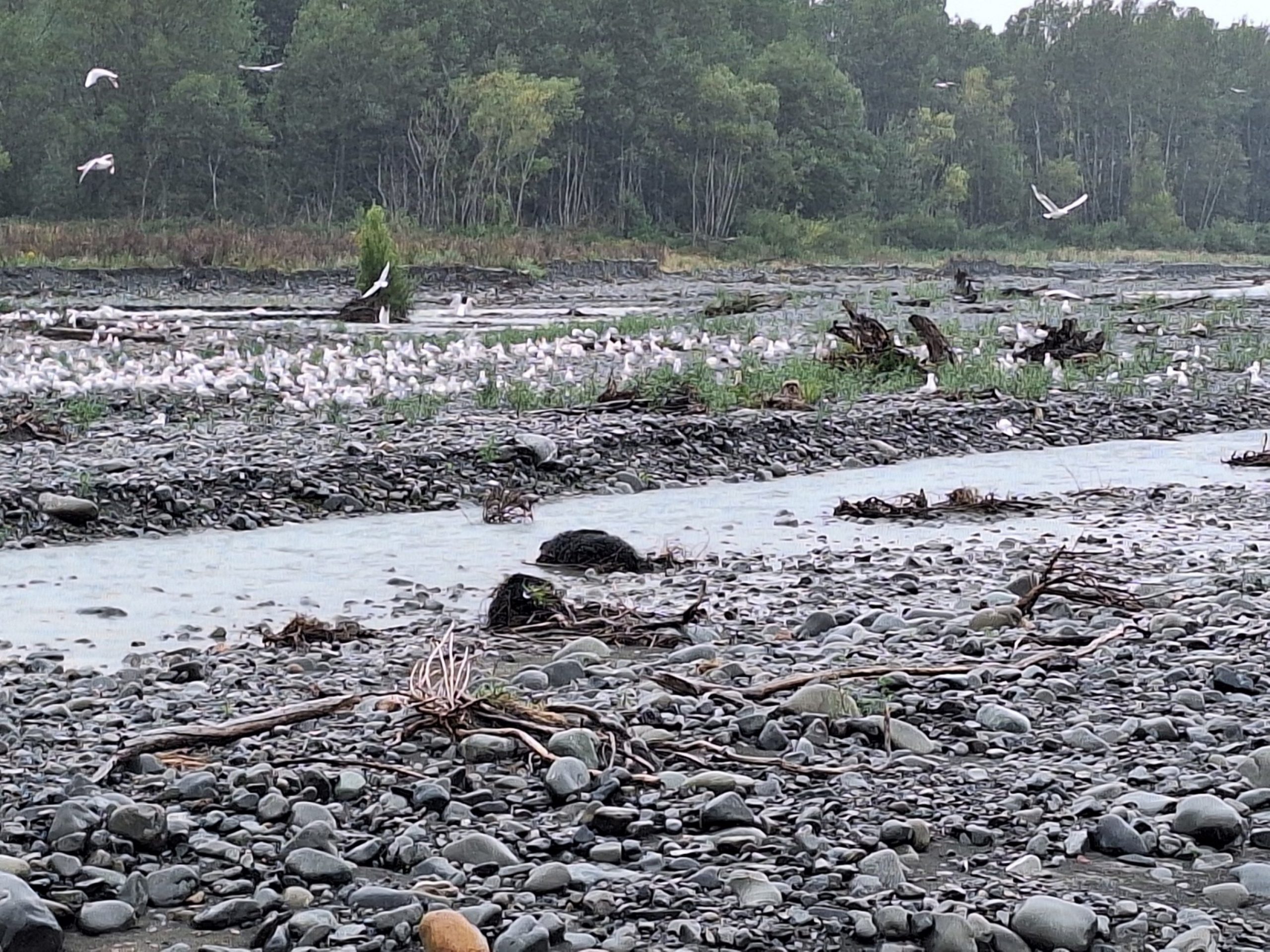
While a colony of the world’s rarest gull was washed out from the high profile site of the Ashburton River at the State Highway 1 bridge, three other colonies have had more luck.
Environment Canterbury senior land management and biodiversity advisor Donna Field said it had been sad to see the SH1 colony, of about 250 birds, washed out by rising river levels on January 3 after heavy rain.
They had been at the stage of sitting on nests with eggs.
But a colony of about 1000 birds upstream of the bridge, in the middle reaches of the river, was doing well. Chicks were now at the fledgling stage, and starting to fly away.
They were in an area of rocks larger than shingle.
A second river colony was also doing well, on the north side of the Rangitata River, at its mouth, of about 5000 birds.
Field had recently become aware of a third colony, of about 1500, having settled on a newly planted paddock of fodder beet on a dairy farm.
It was in the Winslow/ Hinds area, nowhere near a season late last year in The Ashburton Courier.
‘‘They were owning these birds, they liked them,’’ Field said.
The 2025-2026 breeding season, which runs to February, had started off with Field not being able to detect any colonies of the threatened species.
It had since been ‘‘full of river.
The property’s farmers were enjoying seeing the gulls there, even though nesting had resulted in the ruin of a small patch of the winter feed crop.
The farmers had become aware of how ‘‘special’’ the birds turning up on the farm were, after reading about the perils of their breeding surprises’’.
‘‘It’s been successful, but in a surprising way,’’ Field said.
Canterbury was a ‘‘stronghold’’ for tarapuka, which nested mostly on braided rivers in the South Island, alongside other endangered birds such as wrybill, black fronted terns, banded dotterels and black fronted dotterels.
On the Ashburton River, Field had noticed in vicinity of SH1, oyster catchers and dotterels having also had some breeding success.