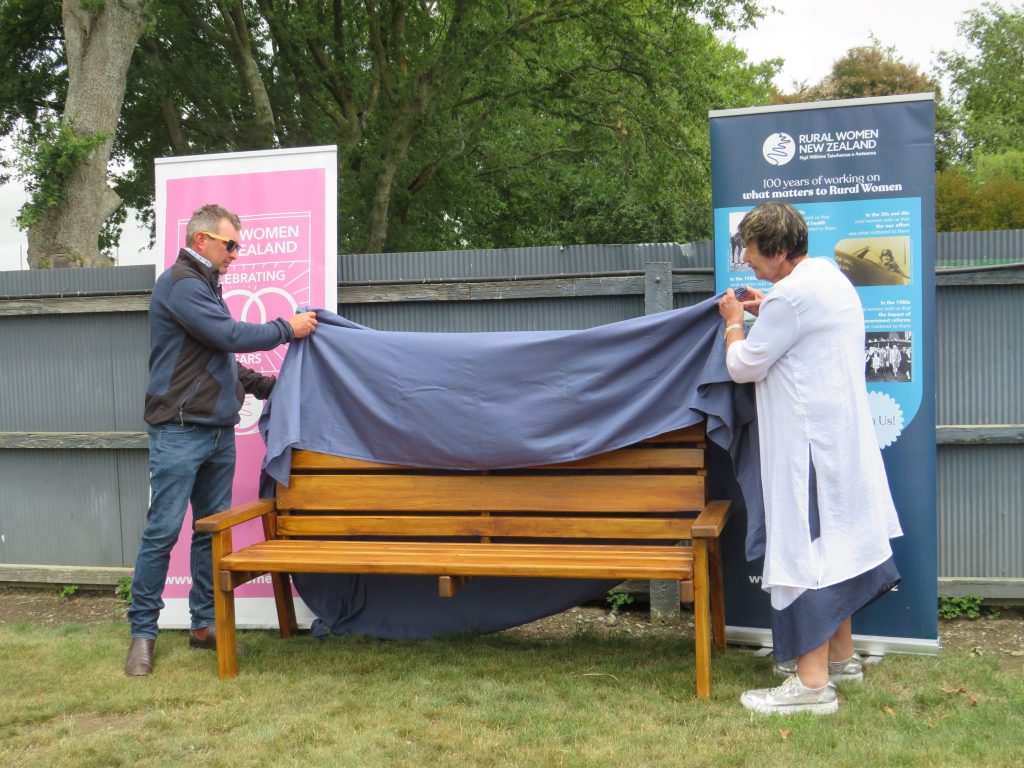
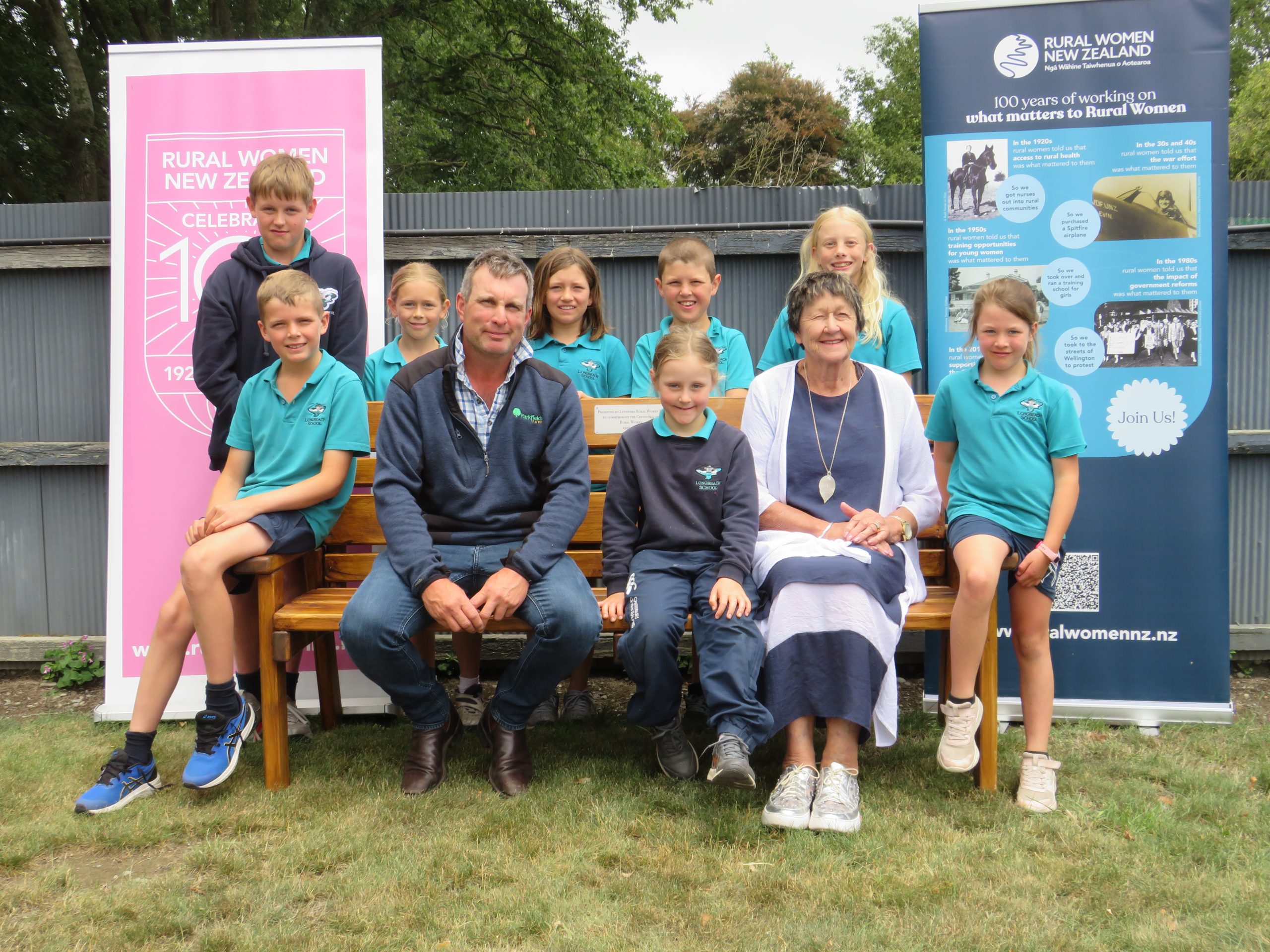
Lynnford Rural Women has given the Willowby Community Pool a wooden bench seat in commemoration of the national organisation’s centennial year.
It was presented by Lynnford president Bev Bagrie to pool committee chair Mark Shera in front of Lynnford members, pool committee supporters, and staff and pupils of Longbeach School.
The pool is on the grounds of the school.
Bev said the idea to give a bench seat to the Willowby pool stemmed from connections Lynnford members had to the area.
Among them Bev, 79, who was a pupil of the former Willowby School from age five; while other members had children, and now grandchildren at Longbeach School.
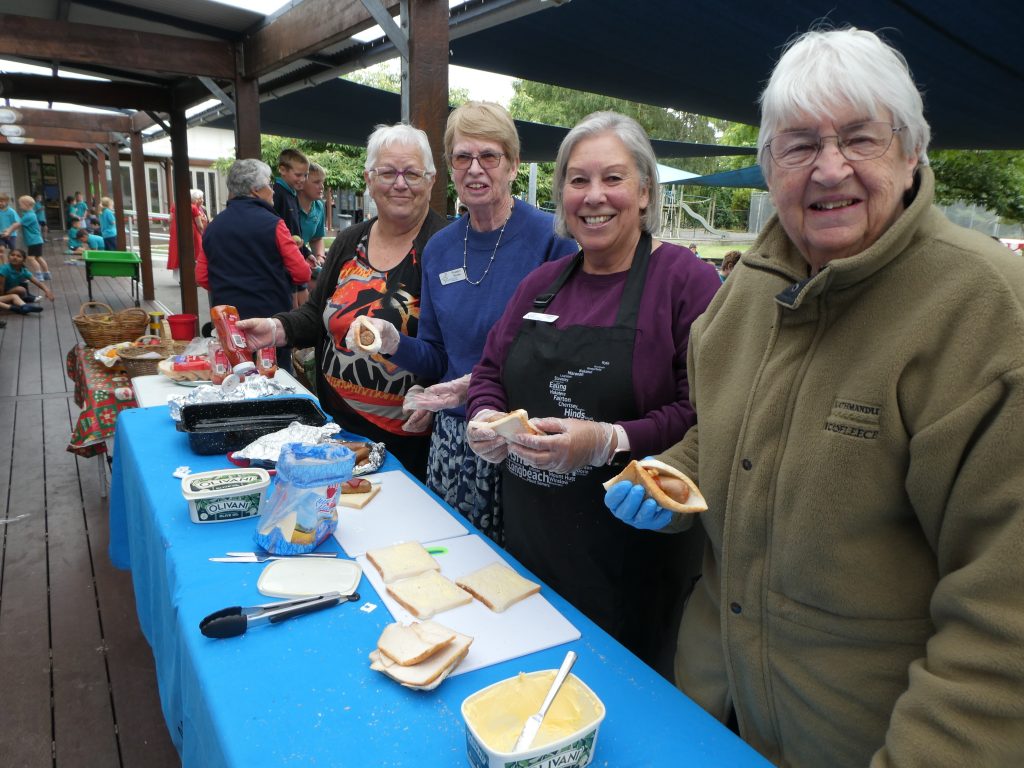
As part of the presentation, pupils enjoyed a barbecue sausage lunch, fruit and ice blocks, courtesy of the Lynnford members, and cooked by staff from Aon – Ashburton.

Shera, speaking on behalf of pool committee members, said the bench was ‘‘much appreciated’’ and would be a complement to the existing picnic tables on site.
Head pupils Sammy Wood and Flynn Hill expressed their thanks for the lunch and bench, then led pupils in a round of applause.
Bev said the bench, made by Dayle Pritchard and the dedication plaque by KJB Systems, acknowledged 100 years of Rural Women New Zealand which had supported many generations of rural women in their everyday lives.
‘‘This year marks an incredible milestone,’’ she said.
‘‘In 1925, life for women and children in rural areas was marked by isolation, intense physical labour, a lack of modern conveniences, significant economic hardship and long distances to get medical care.
‘‘Electricity did not reach many rural areas until 1930 to 1940 when it was available it was initially used for the farm, rather than household purposes.’’
She said imagine having to wash clothes by hand, lighting the copper and only having a bath once a week.
There was no such thing as takeaway meals, or vegetables and produce from the corner shop; women never drove a vehicle.
‘‘In the late 1920s to 1930s brought the harsh realities of the Great Depression, where rural families bore the brunt of economic hardship.
‘‘It was the women who stretched every resource, maintained households with few amenities, and provided the emotional support that kept families and communities afloat.
‘‘Then came the Second World War, when our men folk went overseas to fight for freedom. It was rural women who stepped into running the farms on their own account.
‘‘Today as we look back on this remarkable history, let us draw inspiration from their determination.
‘‘Let us continue their work of building strong local networks, advocating for rural voices and ensuring that every rural woman has the resources and support she needs to thrive.’’