In aiming to improve habitat for threatened tarapuka/black-billed gulls, Environment Canterbury (Ecan) did the opposite.
That is a claim being made by a bird fancier who lives at Tinwald.
The claim is disputed by Ecan.
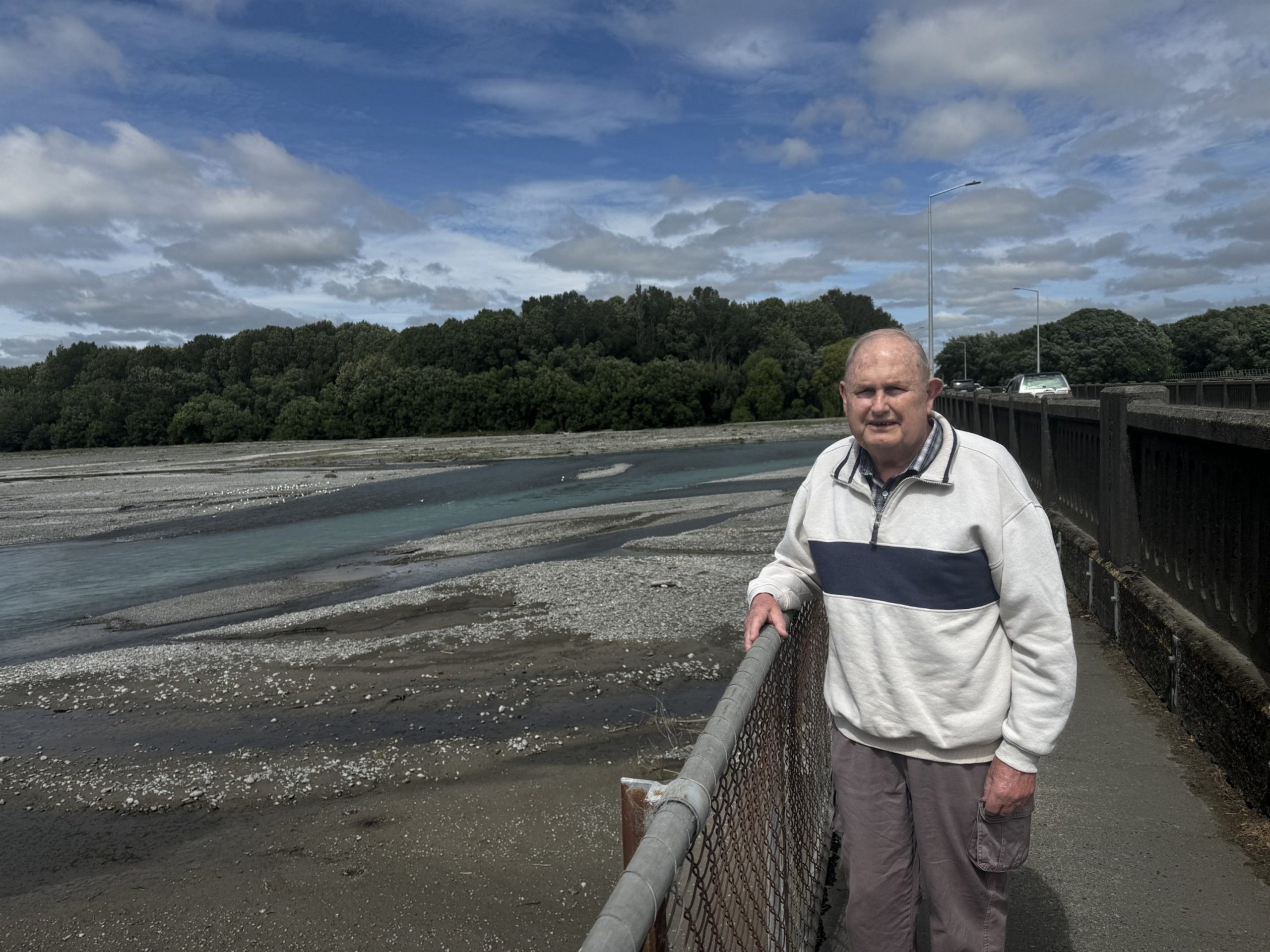
Clive McAuley is disappointed threatened gulls nesting on the Ashburton River at the State Highway 1 bridge are in smaller numbers this year.
A colony of about 40, recently settled at the site, has grown this week to about 500, compared to about 4000 last year before they were washed out by floods.
Clive blames Ecan for the smaller number.
He said digger work undertaken by the regional council and New Zealand Transport Agency Waka Kotahi in August aimed at clearing vegetation from shingle islands, instead reduced nesting habitat.
This was because the digger had inadvertently squashed down and lowered an area close to the bridge, favoured by the gulls in the past, by driving over it.
‘‘I said straight away to my wife ‘These guys have got no idea what they are doing.’ They completely screwed it up,’’ Clive said.
‘‘It’s got to be higher in the middle.’’
He said birds were creatures of habit. So when the gulls saw the area lower and closer to the water, they avoided it.
As a bird breeder and retired member of the Ashburton Fanciers’ Society, Clive is an admirer of all things avian.
He said the tarapuka/black-billed gulls were ‘‘a nice little bird’’.
‘‘I have walked along the bridge when they have got them (chicks and fledglings in nests). I have stood there and watched, just to see what their habits are.’’
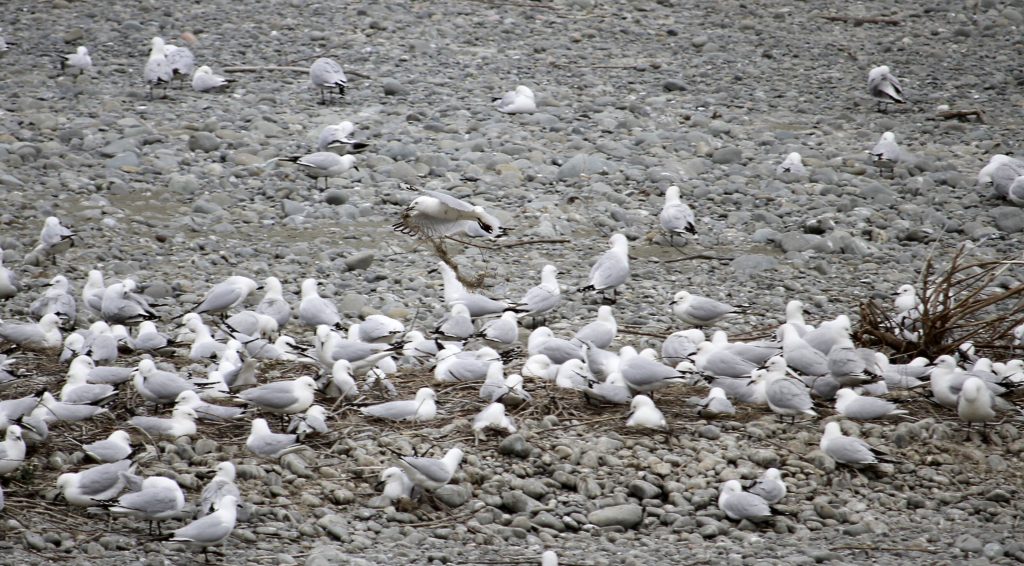
He welcomed the recent increase in population and hoped the gulls would have a successful breeding season and not be washed out by floods.
‘‘I’m hoping there’s not going to be a lot of water, and they will be okay,’’ he said.
Ecan senior land management and biodiversity advisor Donna Field said it was common for gull colonies to naturally move year to year between nesting sites.
The digger work in the river in August had cleared vegetation to create nesting habitat, not lowered the island.
‘‘While many nested at the Ashburton River site last year, this season a significant number have shifted to the Rangitata River mouth,’’ she said.
Hinds farmer, angler, and Ecan councillor Ian Mackenzie said he had noticed a colony of more than 1000 at the Hinds Lagoon earlier this spring.
News of the colonies comes after Ecan appealed for sightings last month.
Meanwhile, Police warn they will prosecute anyone following through on online threats against protected birds nesting this spring and summer in the Ashburton River.
Alongside the tarapuka/blackbilled gulls, other endangered birds such as wrybill, black fronted terns, banded dotterels and black fronted dotterels nest on the river.
On The Ashburton Courier Facebook page last month under a story with advice for four-wheeldrivers to stay out of rivers through to February, one commenter said off roaders ‘‘can go where they want when they want’’ and ‘‘I know where im taking my cruiser this long weekend’’.
On the same page under an earlier story about cost effective wildlife management on the river, one commenter said ‘‘Hook me up couple box’s of ammo and I will sort out the rest’’.
Police Ashburton area response manager Senior Sergeant Janine Bowden said police prosecuted an individual in 2015 who was found to have killed a number of nesting birds in the area.
‘‘We advise anyone who may be looking to follow through on threats that we will not hesitate to prosecute if there is evidence for us to do so,’’ Bowden said.
Meanwhile, Ecan is also warning people about river birds as Crate Day approaches this Saturday.
Revellers are being asked to avoid gravel islands and open areas in riverbeds.
Team leader parks Karen Elliott said gatherings and riverbed driving, even for one afternoon, can wipe out an entire season’s breeding effort.
‘‘When parents are forced off their nests – by dogs, vehicles, drones, or disturbance – eggs can overheat or become exposed to predators such as stoats, cats, and southern blackbacked gulls. Many chicks do not survive a single human interaction,’’ Elliott said.
‘‘These birds don’t nest in trees or in the reeds; instead they lay their eggs directly on the clear open gravels of our braided rivers. Their nests, camouflaged, almost invisible to the human eye.
“It’s this fact that leaves them vulnerable, able to be destroyed in seconds by vehicles, dogs, or even foot traffic.’’
Under the Wildlife Act 1953, disturbing protected birds or destroying nests is an offence and can result in imprisonment and/or a fine of up to $100,000.