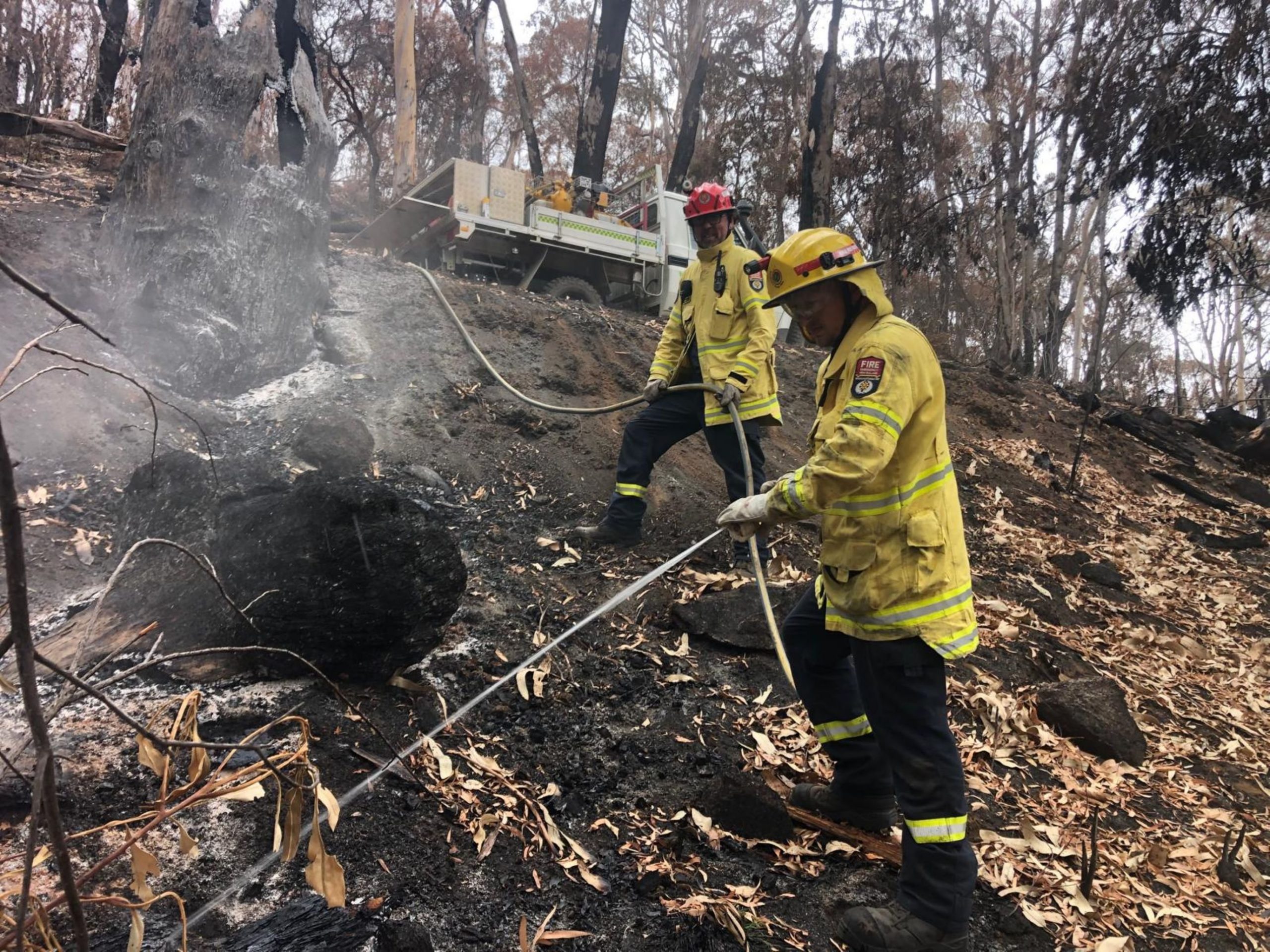
Hinds Volunteer firefighters Matt Luxton and Tim Clark recently returned from fighting the Walwa River Road bushfire, northeast of Victoria in Australia.
They were members of the Bravo contingent of 22 fireys.
Luxton, on his first international deployment, started firefighting before progressing to hazardous tree assessor and road clearing of fire fallen trees.
It allowed tree fellers and heavy machinery to get though.
Luxton has deployed before. He attended the Port Hills fire in Christchurch in 2017, Mackenzie District Pukaki Downs fire in 2023 and the Christchurch West Melton fire in 2024.
He said he had put his name forward to attend national and international deployments to utilise the skills he had obtained through various training courses under Fire and Emergency New Zealand (FENZ).
‘‘It is a passion of mine and helping others in their time of need,’’ Luxton said.
He said there were highlights from the deployment such as experiencing such a large-scale fire and working with likeminded firefighting personnel from other parts of the world.
‘‘The new relationships I’ve made with others is also a real highlight for me,’’ Luxton said.

It was hard, hot and dirty work. But there was downtime too.
‘‘On one of our days off, some of our team purchased some blow-up swimming pool swans and took a ride down the Murray River in Albury to escape the heat. Would have been a funny sight for the locals,’’ Luxton said.
Luxton returned from the twoweek deployment with skills and knowledge for roles in the future.
‘‘I learned a lot more about dry firefighting techniques, hazardous tree assessment in the terrain where we were based which is a lot different from the Mid Canterbury plains,’’ he said.
Luxton thought he knew what destruction looked like from local and national fires he had attended.
‘‘Nothing comes anywhere near to the scale and vastness of this one,’’ he said.
‘‘To give you an idea, it took us over 45 minutes to get to one of the hot spots we were sent to attend to. The area we were deployed to was 36km from where the fire started.
‘‘The total area of the fire burnt about 121,012 hectares (Christchurch is about 140,00ha) with a control line extending around 437 km,’’ he said.
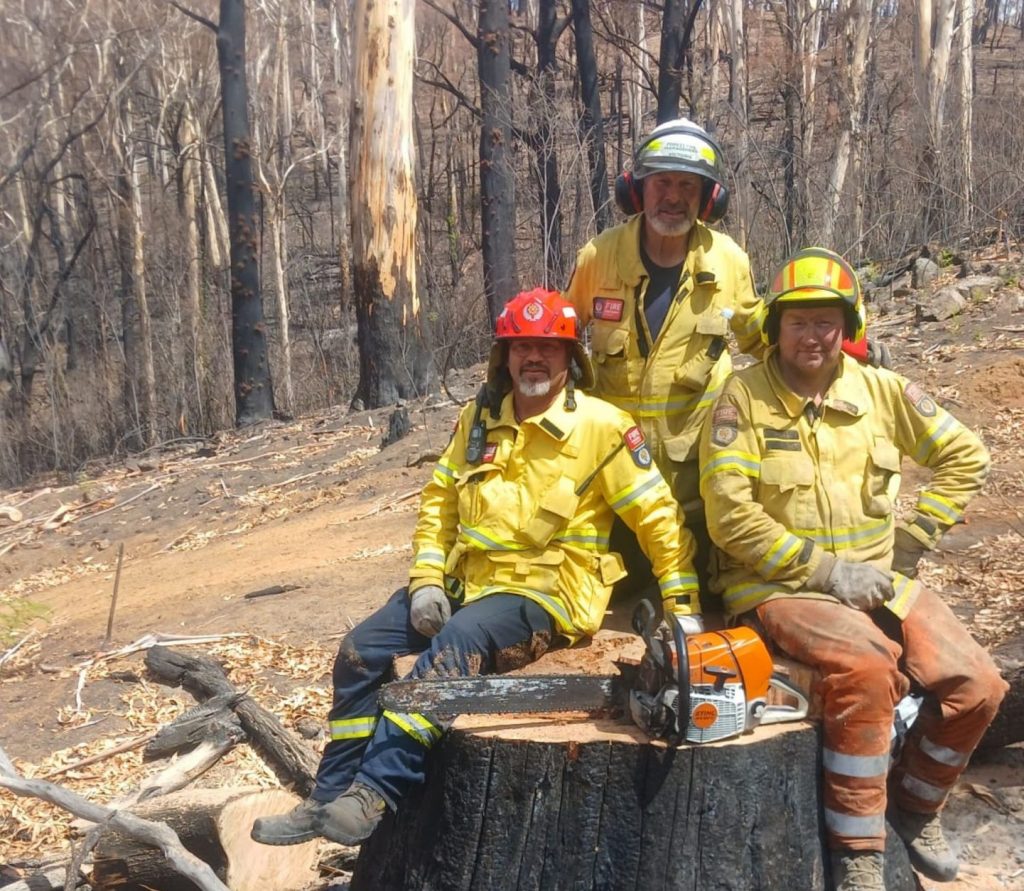
Tim Clark from Hinds Volunteer Fire Brigade has added the Walwa River Road bushfire in Victoria in Australia to his growing list of overseas firefighting deployments.
As a team leader he enjoys mentoring those that have not deployed before.
‘‘Like all my international deployments, being able to work alongside like-minded people all with similar skill set makes it so much more enjoyable,’’ Clark said.
‘‘I’ve been very lucky to travel to some amazing places around the world doing something I am passionate about.’’
One of the most challenging components was the heat.
He said they flew into Melbourne and arrived at their base Tallangatta at 10.30pm where it was 37 degrees.
Most days the temperatures ranged between early 30s to mid 40s.
The arrival was a chance for the local firefighters to take a break and recharge while we took over the workload.
‘‘The Aussie crews and the local communities were extremely grateful and couldn’t thank us enough.’’
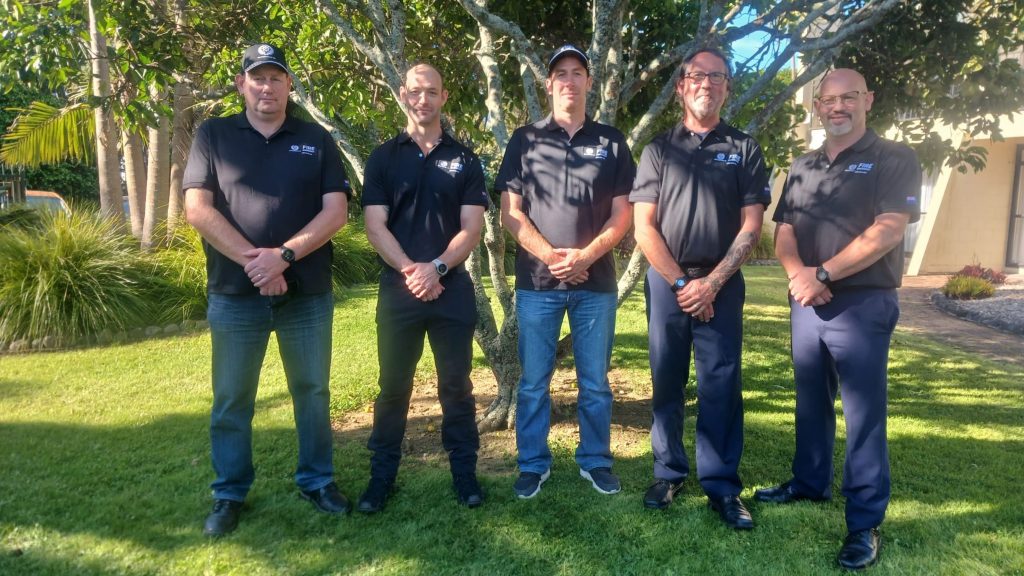

On previous deployments to Canada, he worked suppressing fires and in 2019, while serving in Queensland, he undertook backburning operations.
‘‘This time we were removing dangerous trees from the area where the fire went through to clear and reopen roads,’’ Clark said.
‘‘Some crews went through ahead clearing the roads wide enough to get our vehicles through and marking dangerous trees that needed felling.
‘‘My role was to lead the advanced tree felling crew and I was a heavy machinery supervisor as well.
‘‘Our job was to fell the dangerous trees and remove them away from the road to make the area safe for the public to return.
While Clark said he was lucky he had not seen any animals impacted by the fires, they were likely to be impacted for months until vegetation returned.
‘‘The native forests bounce back really well and we saw the trees, grasses and ferns already starting to come back, this was very encouraging to see,’’ Clark said.
Fire and Emergency New Zealand assistant national commander Ken Cooper said on social media that the Kiwis’ work ethic and achievements had been widely praised.
‘‘This team brought their skills, strength, and spirit to the Walwa fire, working alongside local Australian and Canadian crews in tough conditions. Their mahi has made a real impact, and we’re grateful for the professionalism and dedication they showed every step of the way,’’ Cooper said.
By the time Bravo contingent returned home the fires were well-contained within the perimeter. The hot spots left were in the black, which means they were not high risk.
The initial cause of the fire was believed to be a dry lightning strike which took hold after three days.