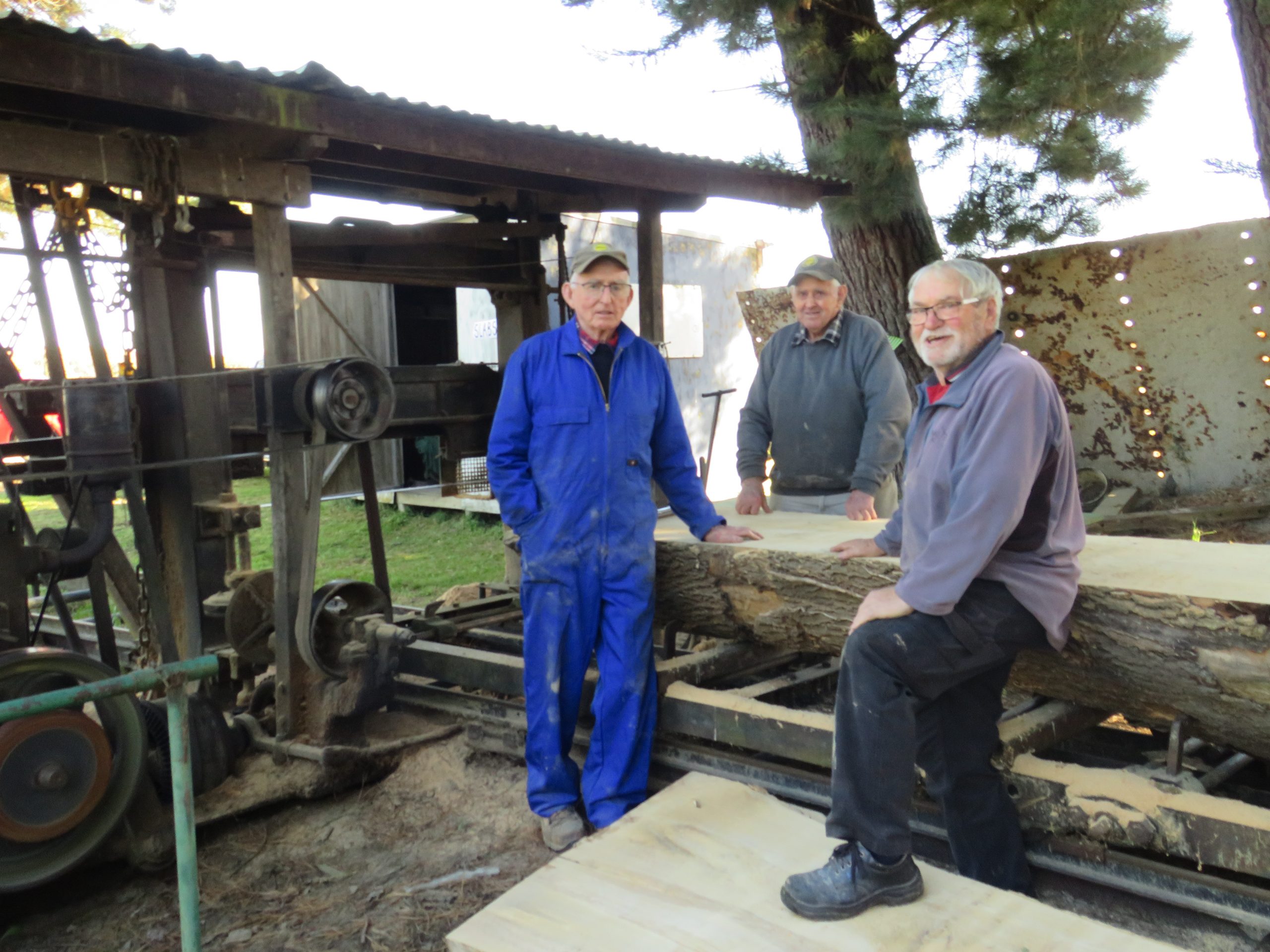
Bill Healey, Merv Peck and Geoff Brown know more than most about the workings of a recently bequeathed portable sawmill.
It’s a 1905 Wehrhahn Brothers Roland sawmill given by the late Peter Lynn, who passed away last month.
It’s a working heritage piece.
The trio are with the Ashburton Woodworkers Club whose members have taken up the mantle to share knowledge on its workings.
The sawmill, originally steam powered but now diesel run, was found at Nordleda in Germany and brought by Peter to New Zealand in 2007.
It was manufactured in Delmenhorst, Germany.
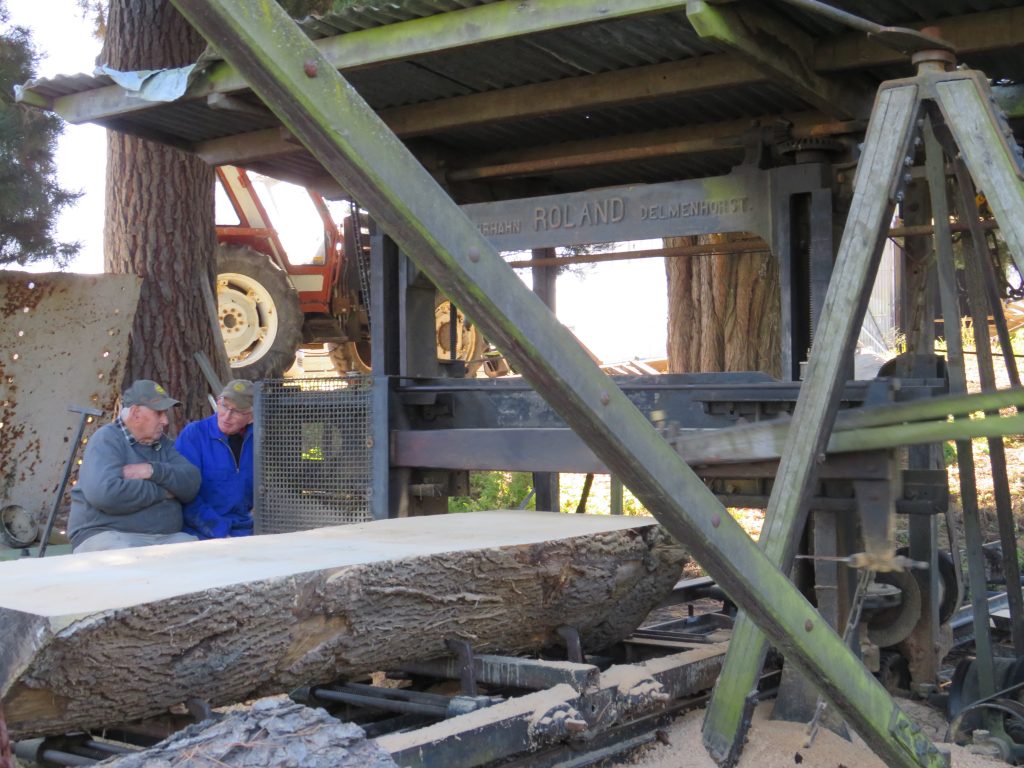
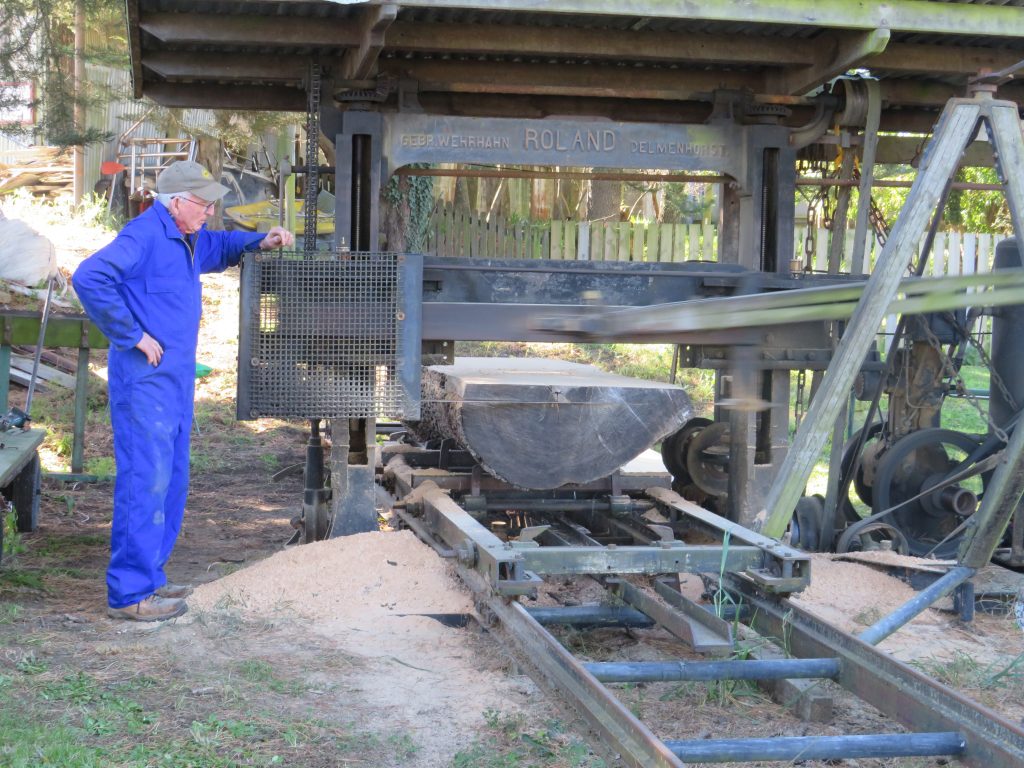
Bill Healey, president of the club, said Peter had bequeathed his van, trailer and the sawmill to the club with the intent it would be a working exhibit at The Plains Heritage Park in Tinwald.
The van comes complete with a heavy-duty winch which is used to pull logs of wood on to the trailer, Bill said.
Plans to relocate it to the park were in motion.
‘‘The pines trees where it’s going have been cut down. They are about to be taken away for firewood and then we are waiting to have the stumps removed.
‘‘We can’t do anything until the stumps are removed.’’
Bill said among Peter’s final wishes, he had organised a builder to shift the plant and also build a storage shed.
‘‘The shed will be made out of recycled timber to go along with the age.’’
‘‘This has been in the pipelines for quite a few years.‘‘
Members have been using the Roland to cut slabs of wood between 55mm to 70mm thick which they have available for sale.
Slab were available in a variety of woods, lengths and sizes, and prices also varied up to $200.
‘‘It’s a bit of a knack to get it going,’’ Bill said, of the sawmill’s starting motor which was rigged up by Peter.
But once going pulleys and wheels in motion produce a rhythmic squeaking beat moving the saw back and forth.
It’s steady, slow work; one 2.6m long slab of Ash took about an hour to cut.
Bill said it was set up to be a one-man operation.
Geoff said the Roland was a heritage item, and in its day was a big step up from pit sawing.
‘‘There’s a variable speed on there that is still used today,’’ he said.
‘‘It runs well but very slow.’’
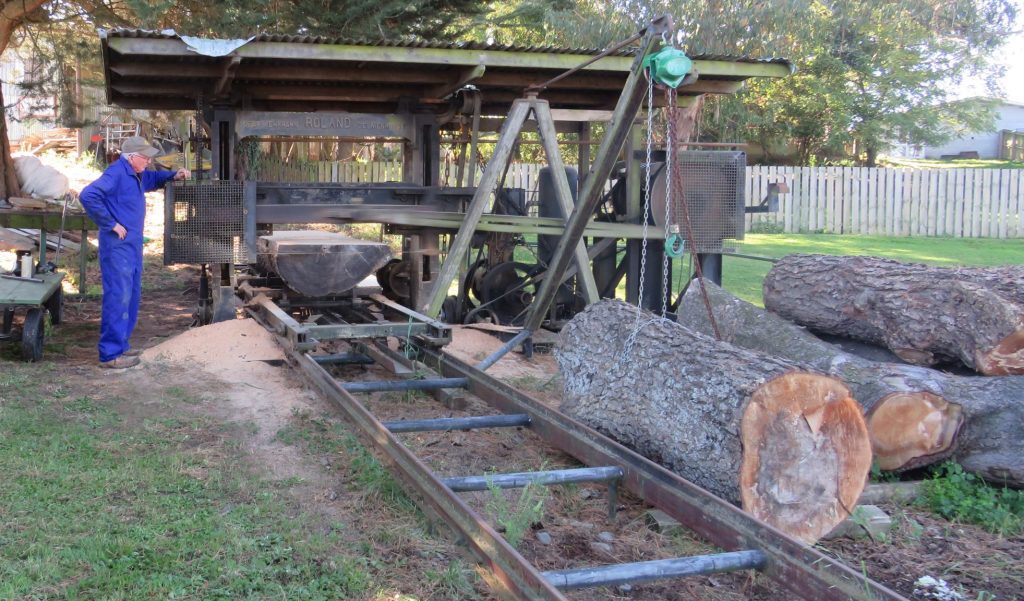
Information on the Roland sawmill has been documented by Peter, online at Peter Lynn Archive.
In his notes, he says the sawmill used a horizontal reciprocating single blade mill with rack and pinion drive to the log carriage, and was originally steam powered; the boiler fired by wood offcuts.
‘‘Owned from new by the Hoberg family (whom I’ve known for many years through kite flying) at Nordleda, a village near the mouth of the Elbe River.”
It was in “excellent original condition” when brought to New Zealand in 2007 and very little restoration was required.
Re-assembly was completed in 2015.
‘‘At the Hoberg’s farm/woodlot it was permanently housed in a basic tar-paper roof building and had the flywheel/crank mounted on a two tonne concrete block to minimise vibrations.
‘‘Now on a transportable base with its own 6hp diesel so that it can be taken to shows and heritage events, it can also be run by a traction engine, steam portable or tractor.
‘‘Interesting features are that the saw frame sliders are wooden, running in “V” shaped cast iron guides set so as to impart a curving motion to the blade for better sawdust clearance.’’
Peter says he was aware of horizontal reciprocating mills while making and operating portable sawmills during the late 70’s and early ‘80’s but unaware of the Roland-style being used in New Zealand.
‘‘The advantage that horizontal mills have over verticals is that once a log has been dogged to the carriage, it stays attached until it’s been sawn into flitches of whatever thickness’s are required.
‘‘Cutting these flitches to width is now usually done on a separate smaller saw (usually circular) but was originally accomplished by stacking flitches vertically on the main carriage and repeating the main operation.’’
Peter said quite a few horizontals were used in Europe, England and the US with one or two in Australia.
‘‘They were usually set up in or beside a forest and were small local operations, often just one person and frequently seasonal.
‘‘Although very slow, they don’t require much power (typically <4kw) and produce high quality timber.
‘‘Re-sawing, cutting to length, stacking, boiler stoking and maintenance kept the operator busy while waiting for each slab to be cut.’’