The family of navy signalman Bruce Rogers, who served in Greek territory in the 1940s, have received his Greek Service Medal posthumously.
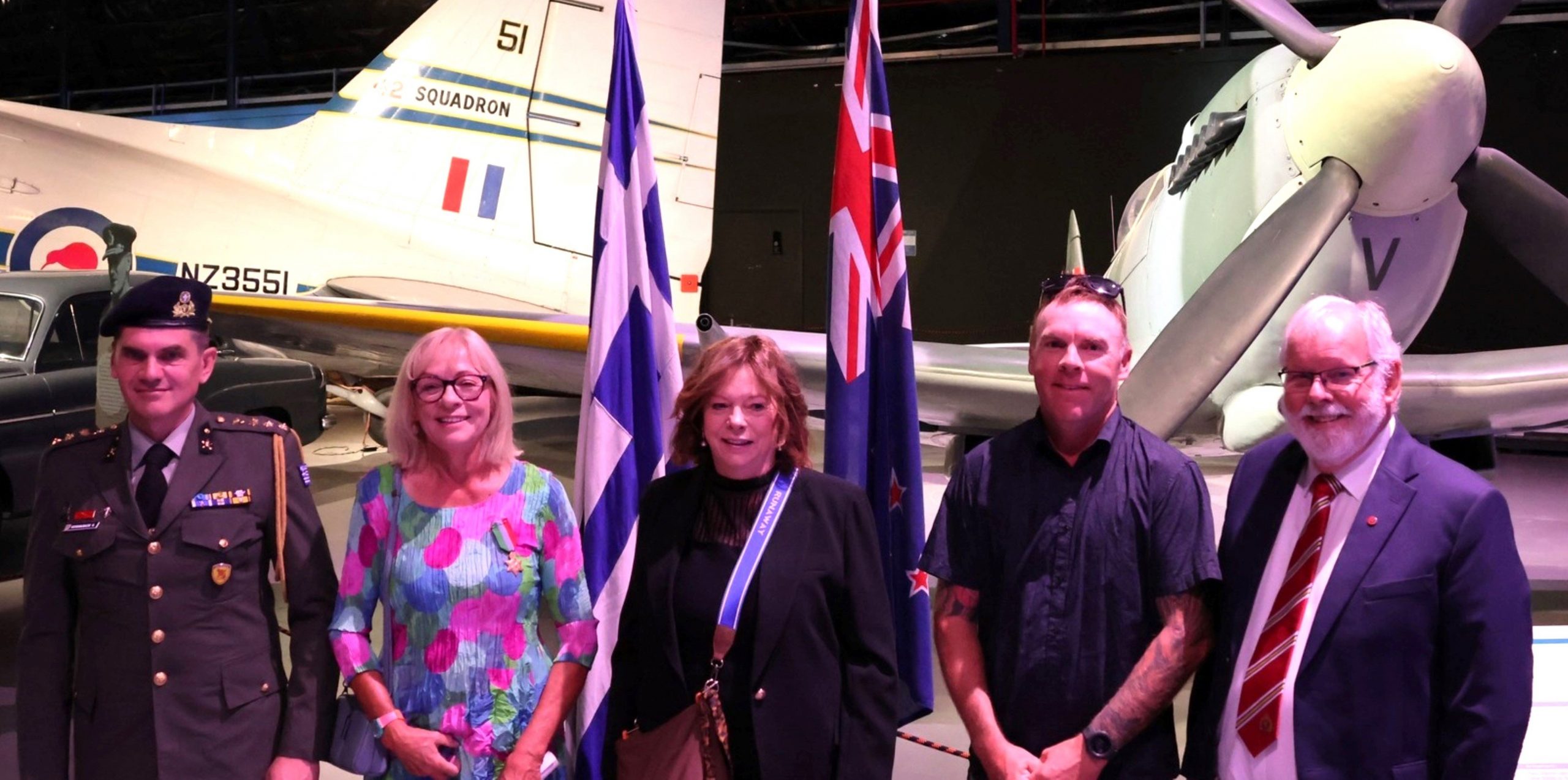
The medal was presented to his daughter, Phillipa Redmond (nee Rogers) at the Air Force Museum of New Zealand by Greek Defence Attaché, Colonel Kyriakos Kyriakakos.
The family was sure Bruce would be have been thrilled after he started the process 46 years ago.
A few years ago, when looking through some old photos, Redmond came across a letter her dad had written to the Consulate of Greece in May 1980.
‘‘As it came to my notice that the Greek Government were awarding commemorative medals to those persons in the New Zealand Forces who served in Greek territory during the German occupation,’’ Bruce wrote.
He received a reply from the Consulate six months later with the procedure for applying for the medal. This proved to be too difficult, and no further correspondence was found.
Bruce died aged 68 of heart disease and leukaemia in 1994.
Upon finding the original letter, Redmond’s husband Philip thought it was important to follow up on the application as Bruce’s service fitted the protocol and he had been entrusted with Bruce’s other medals.
‘‘I am sure he would be proud that Philip persevered and obtained the medal using his history and legal skills over four years, much research and even an application to the District Court,’’ Redmond said.
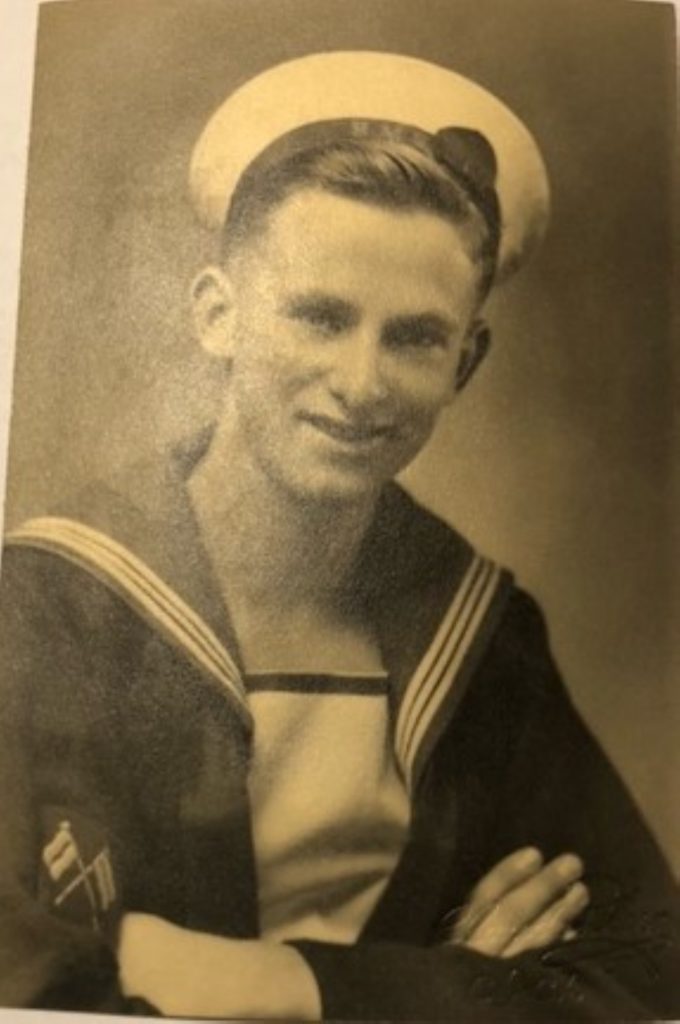
Bruce Henry Rogers was born in Ashburton on September 15, 1925.
He attended Hampstead Primary school followed by Ashburton Technical College where he was one of the school cadets. He was taught basics of marching, shooting, discipline and signalling.
‘‘Although he always wanted to be a car mechanic, his father Harry had other ideas and decided a career in the Post Office would be a better choice,’’ Redmond said.
Bruce enlisted in the Royal New Zealand Navy on November 2, 1943 as soon as he turned 18 where he trained in communications as a signalman and was transferred to the Royal Navy.
He served on a number of ships including the H.M.S. Caledon in the Mediterranean during 1944-1945.
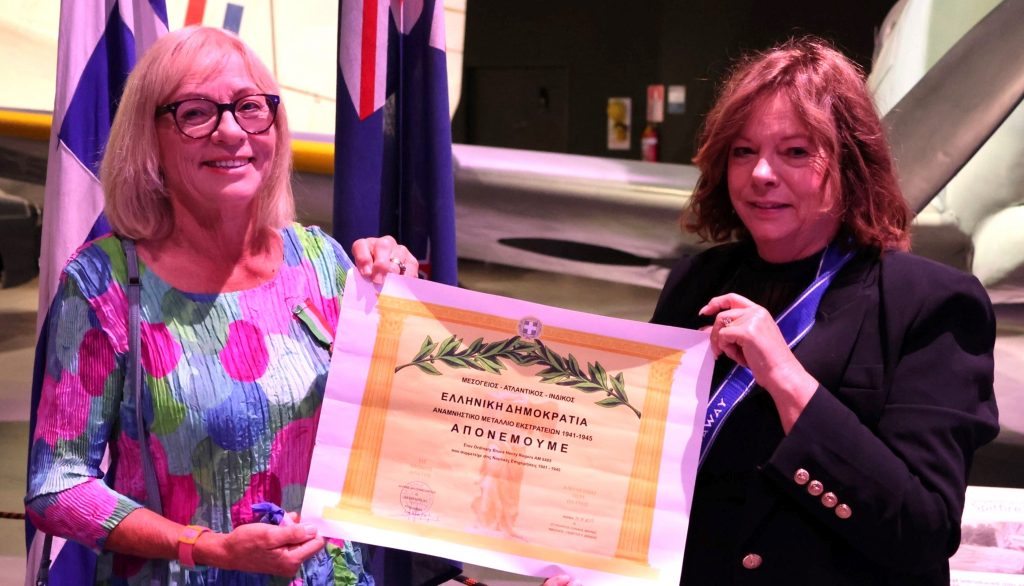
‘‘I remember him saying that his mother thought he would be sailing around in New Zealand waters but was horrified when her only child set sail overseas after approximately three weeks,’’ Redmond said.
‘‘He also joked that in no time he learnt to drink, smoke and go out with wild women.’’Bruce was part of the Royal Navy in the Mediterranean, one of a few New Zealanders seconded to the Royal Navy.
When Bruce returned from the war he went back to work at the Post Office.
It was through this job he met Margaret Ormandy posting a letter for her father. The encounter was the beginning of a relationship which led to marriage on November 15, 1951. They had four daughters, Linda, Phillipa, Nicola and Leonie.
Bruce bought a milk round and worked in the Hampstead area for 18 years before moving to Christchurch where he bought a jewellery business. In later life, he worked at Christchurch Hospital.
He was a lifetime member of the RSA, a member of the Anglican Church and followed the All Blacks games on his transistor radio.
Bruce also received The 1939-1945 Star, The Italian Star, The French and Germany Star, The Defence Medal, The War Medal 1939 – 1945 and The NZ War Service Medal.